
The Self-Builder's Handbook: Constructing Your Dream Home
Why Building Your Own Home Is the Ultimate Path to Personalization
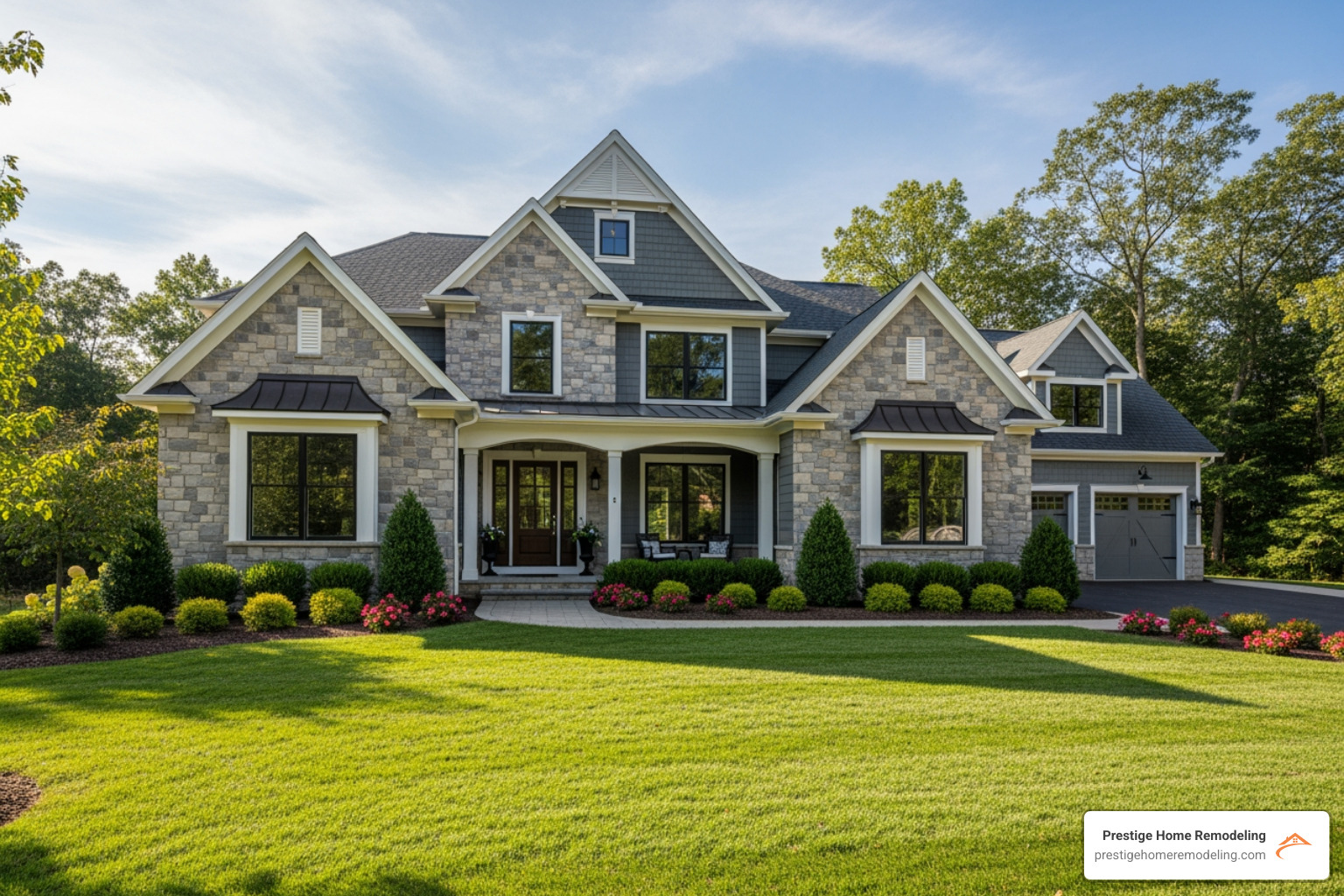
When you build your own home, you gain complete control over every detail—from the floor plan and architectural style to the fixtures and finishes. The process generally involves:
- Planning and Design - Set your budget, secure financing, find a lot, and create your custom floor plan.
- Assembling Your Team - Hire a general contractor, architect, and other key professionals.
- Obtaining Permits - Steer building permits, inspections, and local codes.
- Construction Phases - Complete site prep, foundation, framing, systems, and finishes.
- Final Steps - Pass inspections, get your certificate of occupancy, and move in.
Average Timeline: 9-12+ months Average Cost: $150-$400 per square foot, location and finishes dependent Required Down Payment: 20-25% for construction loans
Building a house allows you to design it exactly as you picture it. While the process is complex, involving everything from land acquisition to managing permits, the payoff is a home customized to your lifestyle with modern, energy-efficient systems. The average cost to build a home ranges from $137,900 to over $520,000, with custom homes often costing more. Thousands of custom homes are built each year, proving that with the right team, this dream is achievable.
With over 30 years in new home construction, our team has learned that success comes from careful planning, transparent communication, and surrounding yourself with skilled professionals who understand your vision.
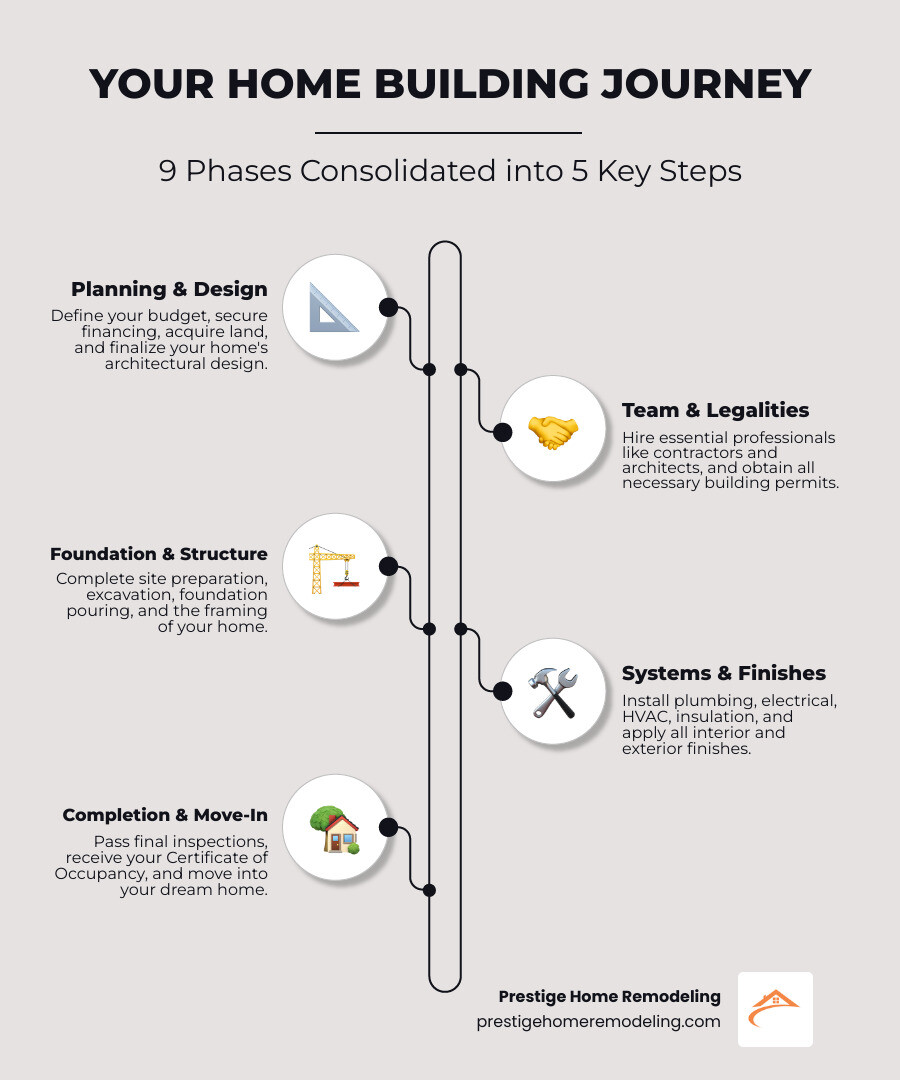
Phase 1: Planning Your Dream Home
The planning phase turns your vision into a tangible blueprint. Getting this foundation right is the key to a successful build.

Creating a Realistic Budget and Securing Financing
A realistic budget is crucial to avoid surprises. When you build your own home, you must account for land, materials, labor, and permit fees. In Maryland, custom homes typically cost $300 to $400 per square foot, not including the land. A 2,500-square-foot home could cost $750,000 to $1 million before the lot purchase.
Always set aside a contingency fund of 10% to 20% of your total budget. This buffer covers fluctuating material prices, weather delays, or design upgrades without causing financial stress.
You'll need a construction loan, which releases funds in stages (draws) as work is completed and inspected. Expect a 20% to 25% down payment and higher interest rates during construction. The loan usually converts to a regular mortgage upon completion. For Maryland homeowners exploring their options, our guide on Financing Options for Maryland Home Remodel covers additional strategies. You can also check Angi's 2024 Cost to Build a House From Top to Bottom for national cost breakdowns.
Finding and Selecting the Perfect Lot
Your lot is the foundation of your vision, but not every piece of land is suitable for every home. Before buying, investigate key factors. Check local zoning laws for building restrictions and get a land survey to define property lines. Soil testing ensures the ground can support your home, while analyzing the topography helps estimate grading costs. Confirm utility access (water, sewer, electric) to avoid significant extra expense, and be aware of environmental regulations like wetland protections that can limit construction. We recommend involving your builder early to spot potential issues.
Designing Your Custom Home
This is the fun part: designing a home that reflects your taste and lifestyle. When you build your own home, every detail is up to you.
Choose an architectural style (e.g., Colonial, Craftsman, Modern Farmhouse) that fits your vision. Your floor plan should match how you live, whether you prefer an open concept or traditional layout. Determine the necessary square footage, including the number of bedrooms and bathrooms, considering both current and future needs like a home office. Decide between a single or multi-story design, which impacts accessibility and cost. Smart design choices and quality finishes will also protect your resale value.
Popular home design styles we see throughout Maryland include Craftsman, Modern Farmhouse, timeless Colonial, and comfortable Ranch homes.
At Prestige Home Remodeling, we guide you through every design decision, balancing your vision with practical considerations to create a home that works beautifully for your life.
Phase 2: Assembling Your Team and Navigating Legalities
You've got your vision, your budget, and your land. Now it's time to choose the people who will build your own home and steer the legal framework.
Hiring the Essential Professionals
The right team is the difference between a smooth build and a nightmare. With over 50 years of combined experience, we know that professionals are key.
- Your general contractor is the project's quarterback, managing schedules, budgets, and quality for 10-20% of the total cost. At Prestige Home Remodeling, we take this role seriously, ensuring your project stays on track.
- Your architect turns your vision into structurally sound blueprints that meet all codes.
- An interior designer helps you steer finishes and fixtures, preventing costly mistakes and creating a cohesive look.
When vetting professionals, check for licenses, insurance, and relevant experience in your Maryland county. Review portfolios, call references, and prioritize clear communication. You'll be working together for months, so choose a team you trust. Our article on How to Choose a Remodeling Contractor in Maryland walks you through what to look for.
Understanding Permits and Legal Requirements
Permits and inspections are non-negotiable and protect your investment. Skipping them leads to significant long-term problems.
Building permits ensure safety and structural integrity, with separate permits often needed for electrical, plumbing, and HVAC work. Zoning permits confirm your project complies with local land-use regulations. Each Maryland county has its own permit process, which can take weeks. An experienced team like Prestige Home Remodeling steers this bureaucracy for you, preventing delays.
As a homeowner, you are entitled to clear written contracts detailing costs, timelines, and responsibilities. Your builder must provide licensing and insurance disclosures. The permit and inspection process catches potential issues early, ensuring your home is safe and properly built. For general information, resources like Homeowner rights and obligations provide helpful context.
How to Build Your Own Home: The Construction Process
Once planning is complete, the physical construction begins. Watching these stages unfold is incredibly rewarding when you build your own home.

From Foundation to Framing
Construction begins with site clearing and grading to ensure proper drainage. After excavation for the basement or crawl space, we pour the concrete foundation. Once cured, the home's skeleton takes shape during framing, when the walls and roof structure are built. Sheathing adds strength to the exterior before we install windows and doors, making the home weather-tight.
Installing Major Systems and Interior Work
With the shell complete, we install the major systems. This includes rough-in plumbing for water and drain lines, electrical wiring for all circuits, and the HVAC installation for heating and cooling. Insulation is then added for energy efficiency. After systems are inspected, we hang and finish drywall, followed by interior painting and trim work to add character.
Exterior and Interior Finishes
The finishing touches bring your personal style to life. We install exterior siding and roofing to define curb appeal. Inside, we lay flooring (hardwood, tile, carpet), and install cabinetry and countertops in kitchens and baths. High-end appliances can run around $1,000 each, so these selections play a major role in your budget. The final step is installing plumbing and electrical fixtures and hooking up appliances. Finally, landscaping, including grading and planting, completes your new home.
Phase 3: Final Inspections and Moving In
Before you start unpacking, a few crucial final steps ensure everything is perfect.
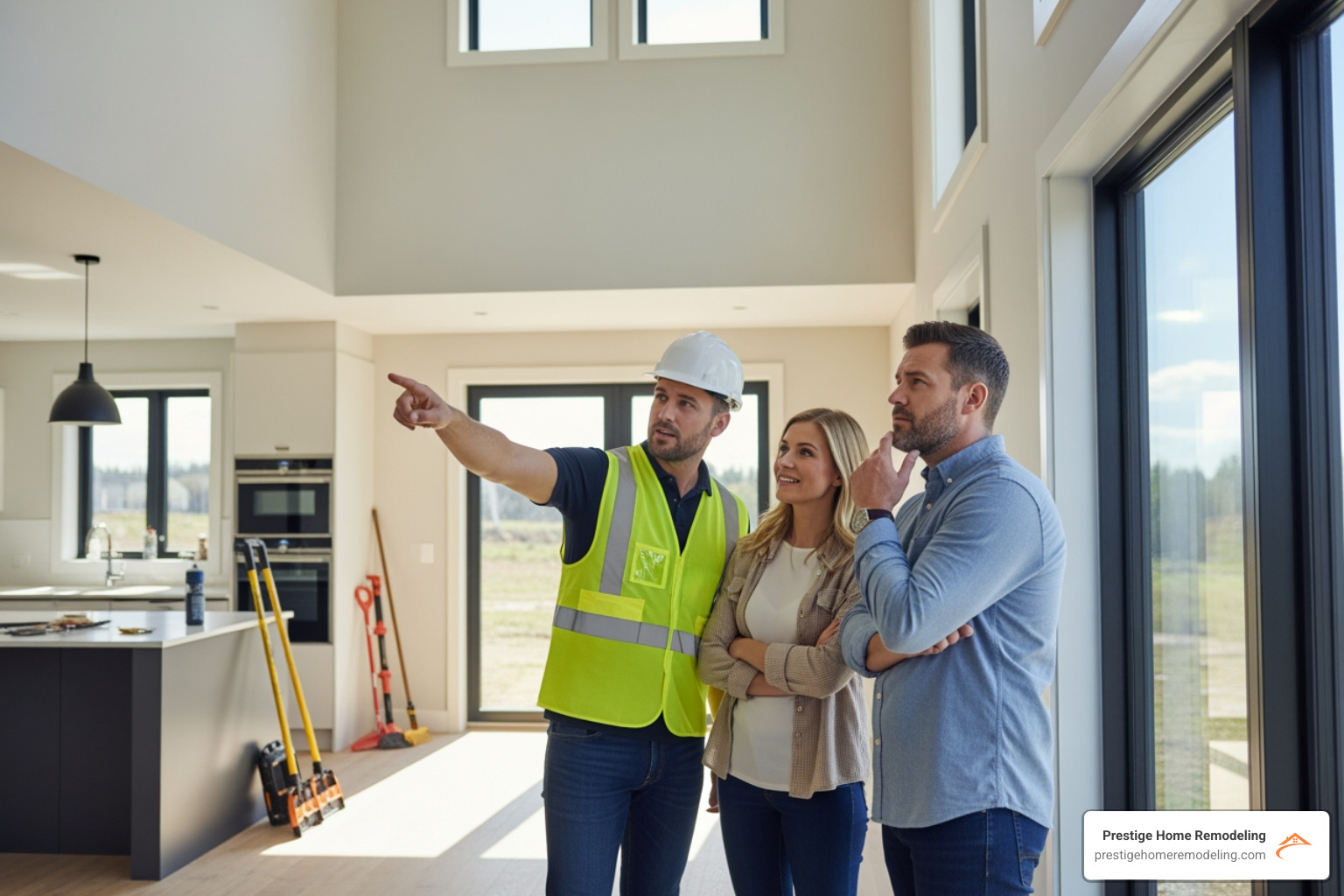
The Final Walkthrough and Closing Out the Project
Before move-in, local officials conduct final inspections of all systems. Passing these inspections earns your Certificate of Occupancy (CO), which is legally required to live in the home. Next, we conduct a final walkthrough with you to create a "punch list" of any minor items needing adjustment. Our team addresses every item before the final payment draw is released. We also provide you with all warranty information, including our 3-year warranty, for your peace of mind.
Key Considerations When You Build Your Own Home
Before settling in, a few final steps are needed. Ensure all appliances are installed and working. Arrange for a professional final cleaning to remove construction dust. Confirm all utilities are connected in your name. Carefully plan your move to make the transition smooth. Finally, enjoy setting up your new space and making the house your home. When you build your own home, these final steps mark the beginning of life in a space designed specifically for you.
Building vs. Buying: Which Is Right for You?
Deciding whether to build your own home or buy an existing one comes down to your priorities, budget, and timeline. In Maryland's dynamic market, we help families work through this decision every day.
Let's break down the options:
| Feature | Building a New Home | Buying an Existing Home |
|---|---|---|
| Cost | Higher upfront, potentially higher per square foot | Often lower upfront, but potential for hidden costs |
| Customization | Complete control over design, layout, finishes | Limited to renovations or cosmetic changes |
| Timeline | Longer (9-12+ months) | Shorter (weeks to a few months) |
| Maintenance | Lower initial maintenance, new systems & warranty | Higher potential for immediate repairs & updates |
| Energy Efficiency | High (modern standards, materials) | Varies, often requires upgrades for efficiency |
| Location | Can choose specific lot, potentially undeveloped | Limited to available inventory in desired areas |
| Emotions | Excitement of creating, potential for stress | Immediate gratification, less decision-making |
For a deeper dive, check out our guide: Build or Remodel: Complete Guide - Hunt Valley, Cockeysville, MD.
Advantages of Building a New Home
The primary advantage when you build your own home is total customization—you design a space that fits your life perfectly. Plus, everything is new, from the foundation to the appliances, which means fewer initial repairs and manufacturer warranties for peace of mind. New homes are built to modern energy efficiency standards, resulting in lower utility bills. They also feature modern floor plans with open-concept living areas and dedicated home offices that suit today's lifestyles.
Is It Cheaper to Build Your Own Home or Buy Existing?
The cost comparison isn't simple. Building often has higher upfront costs, especially when you factor in the land purchase. An existing home may have a lower initial purchase price.
However, building can lead to long-term savings through lower utility bills from high-efficiency systems and reduced maintenance costs, as you won't face immediate repairs like a new roof or HVAC system. A well-built custom home with modern features also tends to have strong resale value.
The right choice depends on your priorities: customization and long-term efficiency versus a faster move-in and potentially lower initial price.
Frequently Asked Questions about Building a Home
Building a home is a big decision, and it's normal to have questions. Here are answers to the most common ones we hear.
How long does it take to build a house?
Building a custom home typically takes 9 to 12+ months from planning to move-in. The exact timeline depends on several factors, including the complexity of your design, the speed of permit approvals in your Maryland county, and unpredictable weather delays. Supply chain issues for specialty materials or delays in inspection schedules can also affect the timeline. An experienced team can help manage these variables and keep you informed.
How much does it cost to build a custom home?
The cost to build your own home varies significantly. While the national average is around $150 per square foot, expect $300 to $400 per square foot for a custom home in Maryland, not including land, according to data from sources like Angi's 2024 Cost to Build a House From Top to Bottom. Key cost drivers include:
- Location: Building costs are higher in desirable areas.
- Size and Complexity: Larger, more intricate designs cost more.
- Finishes and Materials: Luxury choices in flooring, cabinets, and fixtures increase the budget. High-end appliances can cost $1,000+ each.
- Land and Site Prep: The cost of the lot and preparing it for construction are major expenses.
- Professional Fees & Contingency: Budget 10-20% for your general contractor and another 10-20% for a contingency fund.
Can I act as my own general contractor?
Technically, you can act as your own general contractor (an owner-builder) to potentially save 10-20% on costs. However, this is a massive undertaking. You would be responsible for hiring and managing all subcontractors, scheduling, purchasing materials, and handling all permits and inspections. It is a full-time job that requires significant construction knowledge and organizational skills. As the owner-builder, you also assume all legal and financial risks and liabilities for the project, and some jurisdictions have specific requirements you must meet, as outlined in resources like the Owner-Builder Exemption. While the savings are tempting, any mistakes can quickly erase them. For most people, the expertise and peace of mind offered by a professional general contractor are well worth the cost.
Your Dream Home Awaits
Building a custom home is a complex but incredibly rewarding journey. It's the path to creating a space that truly reflects your lifestyle, where every detail is your choice. When you build your own home, the key to a successful and enjoyable process is having the right team by your side.
Expert guidance helps you steer decisions, avoid costly mistakes, and bring your vision to life. At Prestige Home Remodeling, our 50+ years of combined experience ensure your project is delivered on time, on budget, and to the highest standards. We serve homeowners across Maryland, including Anne Arundel, Baltimore, Carroll, and Howard Counties.
If you're ready to turn your dream into a reality, we're here to guide you every step of the way. Your custom-built sanctuary is waiting. Contact a Custom Home Builder in Maryland today to start the conversation.