
Restoring Charm: A Guide to Historic Home Renovation in Maryland
Why Historic Home Renovation Maryland Deserves Your Attention

Historic home renovation Maryland projects connect homeowners with the state's rich architectural past while creating beautiful, functional spaces for modern living. If you're considering restoring a historic property in Maryland, here's what you need to know.
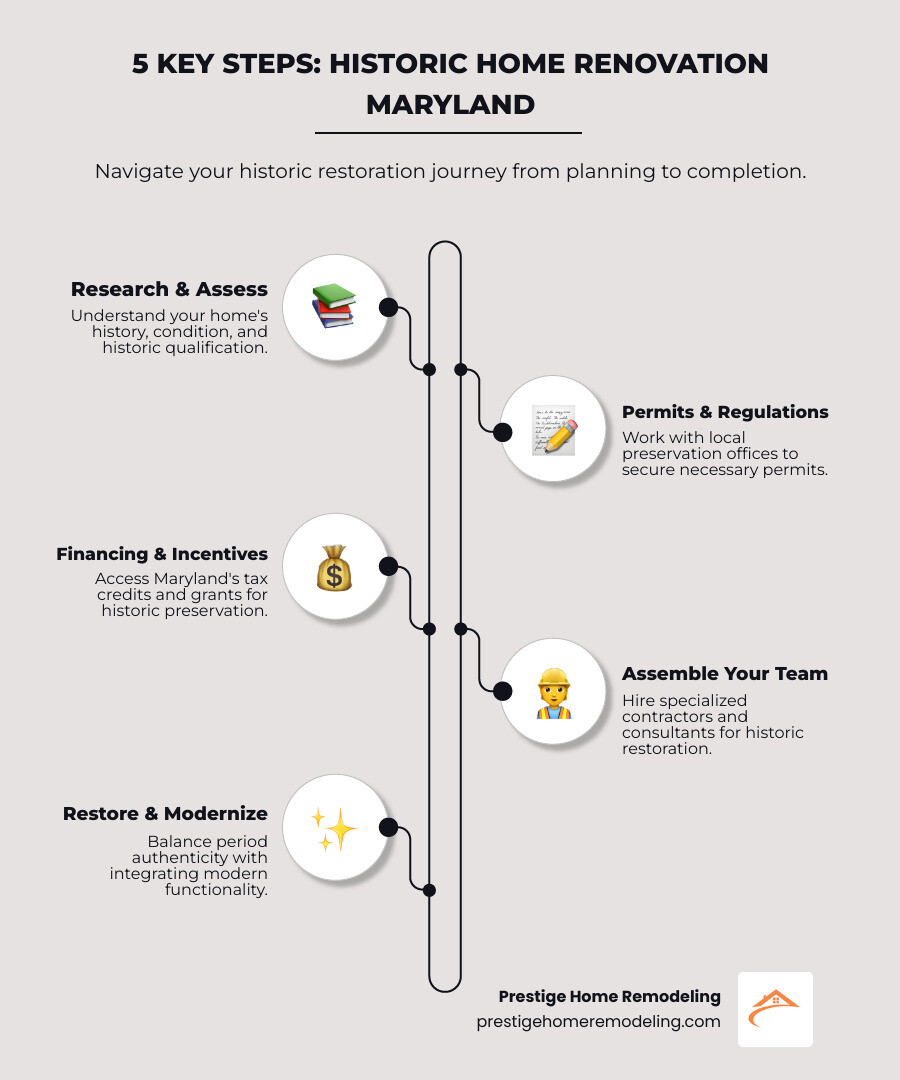
Quick Guide to Historic Home Renovation in Maryland:
- Understand if your home qualifies - Typically 50+ years old with architectural or historical significance.
- Obtain necessary permits - Work with local historic preservation commissions before starting.
- Access financial incentives - Maryland offers tax credits and grants for historic preservation.
- Hire specialized professionals - Seek contractors experienced in historic restoration.
- Balance preservation with modernization - Integrate contemporary systems while maintaining historical character.
Maryland's historic homes, from Federal townhouses in Annapolis to Victorian estates in Baltimore County, showcase craftsmanship that has endured for generations. Owning one means you're a steward of history, preserving a unique character that can't be replicated.
However, restoring these treasures involves unique challenges, like outdated systems, structural issues, and the need to balance modern comforts with historical integrity. The reward, though, is substantial. Historic homes often retain their value well, and you can benefit from tax incentives while creating a one-of-a-kind living space.
As Michael Aiello, President & CEO of Prestige Home Remodeling with over 30 years of experience, I've guided countless homeowners through successful historic home renovation Maryland projects. This guide will walk you through the process, from understanding regulations to assembling your expert team.
Understanding Your Maryland Historic Home
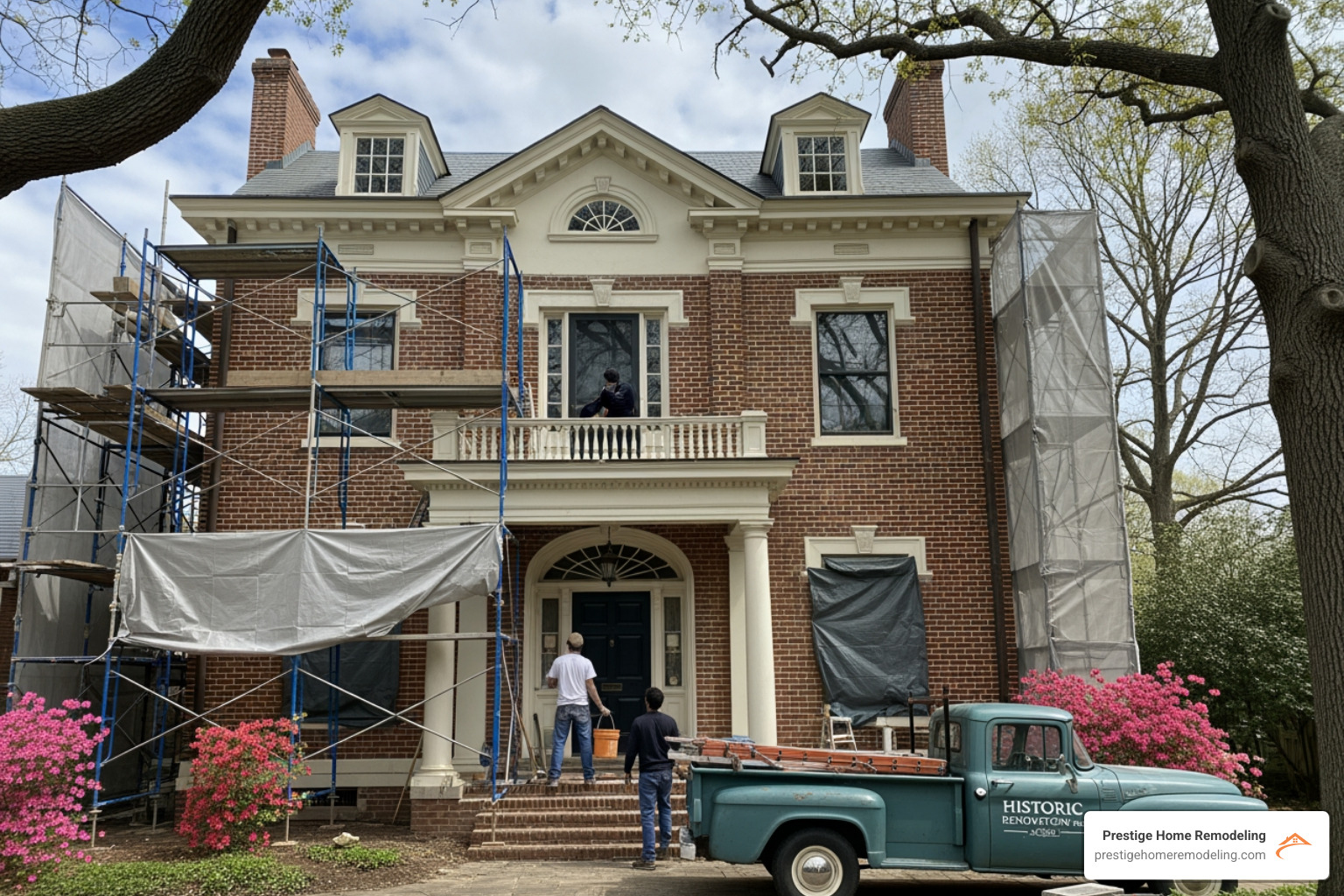
So what makes a home "historic" in Maryland? While the typical starting point is 50 years old, true historic designation depends on architectural significance or historical importance. A home might be a prime example of a specific style, or it may be linked to a notable person or event.
Buyers are drawn to these properties for their irreplaceable craftsmanship, unique character, and tangible connection to the past. Homes in designated historic districts—like those in Annapolis, Ellicott City, or Catonsville—also tend to hold their value well, making them stable investments. When you take on a historic home renovation Maryland project, you're not just buying a house; you're becoming a steward of Maryland's architectural story.
Key Characteristics and Architectural Styles
Maryland's historic homes represent a timeline of American architecture. Understanding these styles is key to a successful renovation.
- Colonial Revival: Popular in the early 20th century, these homes feature symmetrical facades, balanced windows, and classical details.
- Victorian: Known for elaborate ornamentation, dramatic asymmetry, turrets, and decorative trim, these homes make a bold statement.
- Federal Period: Found in cities like Annapolis, these late 18th and early 19th-century brick townhouses showcase refined proportions and neat simplicity.
- Art Deco: Less common in residences, this style from the 1920s and 30s is defined by geometric patterns and sleek lines.
Beyond specific styles, these homes share qualities like hand-carved millwork, unique window designs, and period-appropriate fixtures. Our job is to honor these original elements while thoughtfully integrating modern improvements.
Successful Maryland Restoration Examples
Maryland is full of inspiring restoration stories. The Howard House in Historic Ellicott City, for example, was renovated to include retail space and apartments while restoring its 1850s character. On the Eastern Shore, the 18th-century Cloverfields estate earned a prestigious preservation award for blending original character with sustainable, contemporary solutions.
In Annapolis, a Federal period townhouse was updated with geothermal heating and modern insulation while preserving its original floors and millwork. Even a 1915 Colonial Revival home in Catonsville, once divided into apartments, was restored to a single-family dwelling with its grand porch reconstructed. These projects in Annapolis, Ellicott City, Catonsville, and beyond prove that with specialized expertise, historic home renovation Maryland can transform properties while preserving their legacy.
Navigating Regulations and Opening up Benefits
When you own a historic property, you're not just a homeowner; you're a preservationist. This role comes with a unique set of rules and some attractive financial perks. While historic home renovation Maryland projects involve more paperwork than a typical remodel, these regulations protect the architectural heritage that makes these homes special.
Key Regulations for Historic Home Renovation Maryland
Before starting any work, you must obtain the necessary permits from your local historic preservation commission. These commissions, found in areas like Annapolis, Baltimore City, and Ellicott City, review proposed changes to ensure they meet preservation standards.
Regulations are typically stricter for exterior modifications. Changes to your facade, windows, roofline, or even paint colors often require approval to maintain the home's original appearance and the character of the historic streetscape. Interior renovations generally allow more flexibility for updating layouts and modernizing spaces like kitchens and bathrooms. Beyond aesthetics, regulations also address structural integrity to ensure the building's long-term stability. Navigating these requirements is where experienced professionals become invaluable.
Tax Incentives and Helpful Resources
Maryland offers competitive financial incentives to encourage historic preservation. The Maryland Historical Trust administers a historic tax credit program that can significantly offset your renovation costs, making an ambitious project more achievable.
Several organizations also provide support. Preservation Maryland's Historic Property Redevelopment Program makes direct investments in restoring historic places across the state. The Maryland Heritage Area Authority and local preservation societies in counties like Anne Arundel, Baltimore, and Howard also offer guidance, resources, and sometimes even small grants. If your property is in the Four Rivers Heritage Area, you'll find additional region-specific resources.
Understanding these incentives can be complex, but they offer substantial support for homeowners committed to preserving Maryland's architectural legacy. For broader information, see our guide on financing options for your Maryland home remodel.
The Art of Restoration: Balancing History with Modern Living
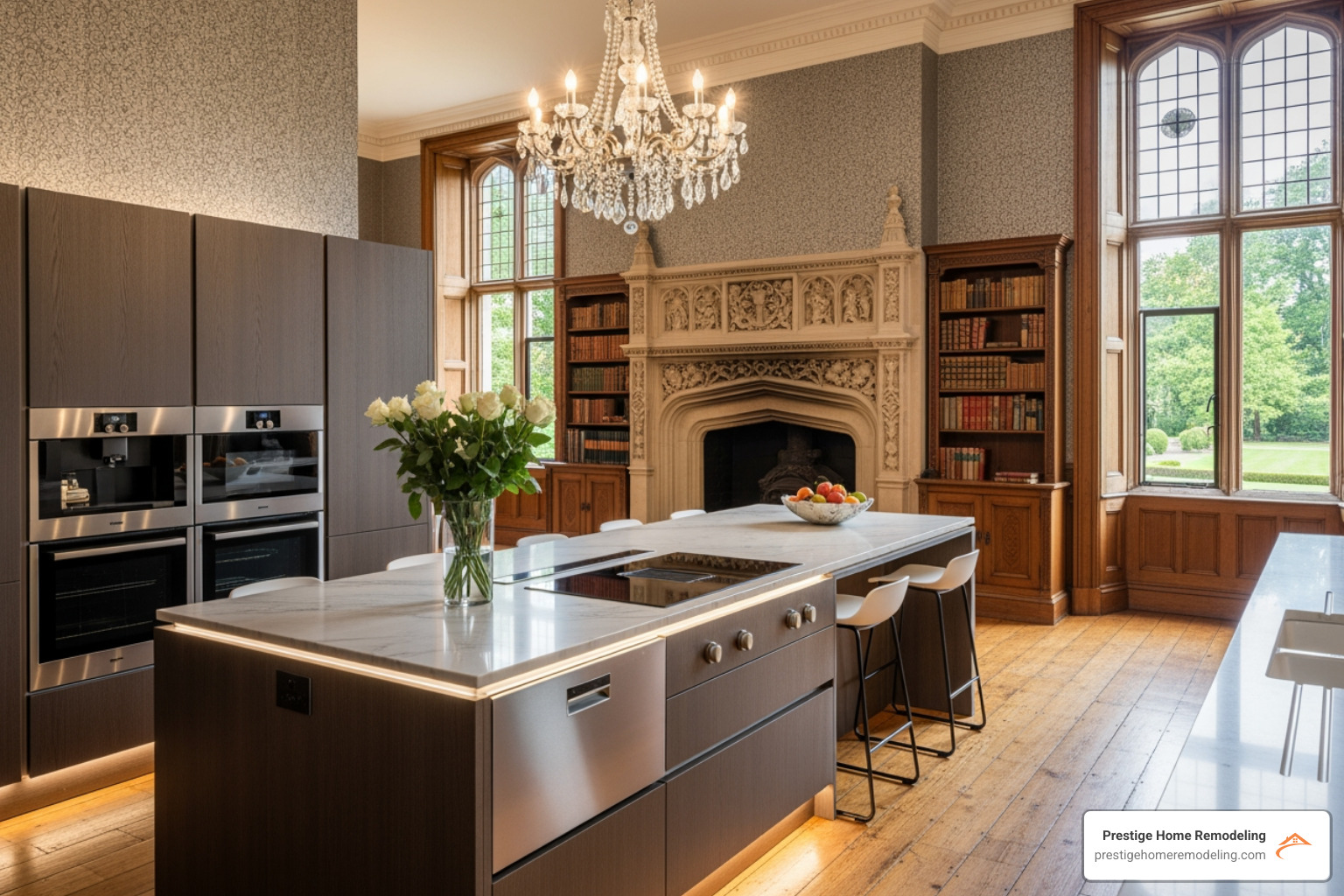
The goal of a historic home renovation Maryland project isn't to freeze a house in time, but to create a home that honors its past while embracing the present. This balance requires meticulous planning and expert craftsmanship to seamlessly weave modern updates into the original fabric of the home. It's about preserving the soul of the house while making it comfortable and functional for a modern family.
Types of Restoration Work
A full restoration often involves several types of work:
- Structural Restoration: This is the essential first step, addressing the home's "bones." It includes repairing foundations, reinforcing weakened beams and joists, stabilizing walls, and fixing roofs to ensure the home is safe and sound for another century.
- Aesthetic Restoration: This is where the home's character is revived. It involves restoring or replicating architectural details like intricate moldings, period-appropriate trim, original windows, and hand-forged hardware. This work requires artisans with specialized skills in historical craftsmanship.
- Modernization: This phase brings the home into the 21st century. It includes Upgrading your kitchen, Updating bathrooms, and installing modern electrical, plumbing, and HVAC systems. The key is discretion—integrating these systems without compromising the home's historic integrity.
Common Challenges in Historic Home Renovation Maryland
Restoring a historic home comes with a unique set of challenges. Being prepared for them is key to a successful project.
- Outdated Systems: Electrical, plumbing, and heating systems in older homes are often inadequate and unsafe for modern needs. Replacing them requires careful planning to minimize disruption to historic walls and floors.
- Structural Issues: Over time, foundations shift, beams sag, and water damage can compromise framing. We often uncover hidden rot, termite damage, or improper past repairs that must be addressed correctly.
- Sourcing Period-Correct Materials: Finding materials to match original details—from custom-milled crown molding to slate roof tiles—can be a challenge. It often requires working with specialized suppliers and craftspeople or using reclaimed materials.
- Hidden Surprises: Opening up old walls almost always reveals the unexpected, such as hidden structural damage or hazardous materials like lead paint and asbestos that require professional remediation.
- Energy Efficiency: Historic homes often lack modern insulation and have single-pane windows. We improve efficiency by adding insulation where it's not visible, installing discreet storm windows, and upgrading HVAC systems.
These challenges are manageable with the right team and realistic expectations. If you're Planning for a home addition, the complexity increases, requiring a design that complements the original structure.
Assembling Your Dream Team for a Historic Home Renovation Maryland
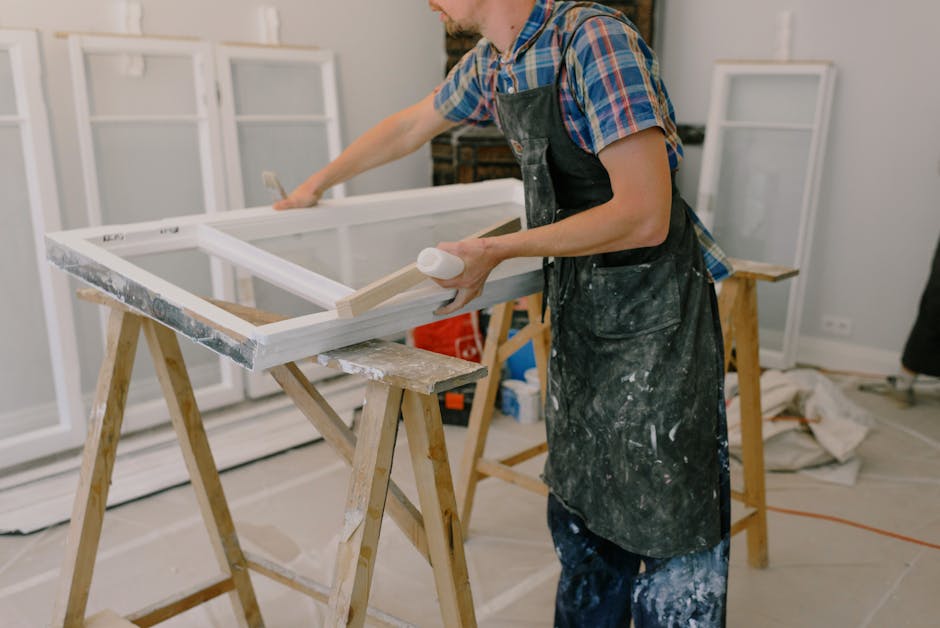
A historic home renovation Maryland project is only as successful as the team behind it. You can't approach these properties like a standard remodel; they require professionals who are fluent in the language of historic construction. Specialists can spot issues others might miss, source period-appropriate materials, and skillfully integrate modern systems without destroying the home's unique character. Your team might include architectural historians, building conservators, and other experts who can inform the restoration process.
Finding and Choosing Qualified Professionals
Finding the right specialists requires careful vetting.
- Seek Recommendations: Start by contacting local historic preservation societies in your area (Annapolis, Ellicott City, Baltimore County, etc.). They maintain networks of qualified professionals. Also, talk to neighbors who have completed similar projects.
- Review Portfolios: Dig into a contractor's portfolio to see their completed historic renovation projects in Maryland. Look for a long track record and any awards from preservation organizations.
- Visit Completed Projects: Whenever possible, visit a completed project in person. This allows you to assess the quality of craftsmanship and see how modern systems were integrated.
- Check References: Ask previous clients specific questions about the contractor's communication, problem-solving skills, and respect for the home's history.
- Consider a Design-Build Firm: This model, where the architect and contractor work as a unified team, is ideal for complex historic renovations. It streamlines communication and ensures preservation goals are prioritized from start to finish.
You need a team that shares your passion for preserving your home's character. For more general advice, our article on How to choose the right remodeling contractor offers practical tips. Your historic home deserves professionals who see themselves as stewards of Maryland's history.
Frequently Asked Questions about Maryland Historic Renovations
Over decades of guiding homeowners through historic home renovation Maryland projects, we've found that many people have the same questions. Here are answers to the most common ones.
How old does a house have to be to be considered 'historic' in Maryland?
The general benchmark is 50 years old, but age isn't the only factor. A home's official designation depends on its architectural or historical significance. A property might be a perfect example of a particular style, like a Federal period townhouse, or be connected to an important local event. Some homes younger than 50 years can even be considered "contributing" to a historic district if they possess unique architectural merit.
Can I get financial help to restore my historic Maryland home?
Yes! This is one of the biggest benefits of taking on a historic home renovation Maryland project. The state offers a competitive historic tax credit program through the Maryland Historical Trust, which can provide substantial financial relief. Many counties and cities with historic districts, such as Annapolis and Baltimore, also offer local grants or programs. Organizations like Preservation Maryland may also provide direct assistance. We always advise exploring these resources early in your planning. For more on financing, see our guide on More info about financing options for your remodel.
How do I add modern comforts without ruining my home's character?
This is the central challenge of historic renovation, and it's solved through thoughtful planning and expert execution. The key is to blend the old and new seamlessly. Here's how:
- Integrate Systems Discreetly: Modern HVAC, plumbing, and electrical systems can be hidden within walls, chases, or new additions. We've installed high-efficiency systems like geothermal heating in historic homes without any visible impact.
- Use Period-Appropriate Materials: When Upgrading your kitchen or Updating bathrooms, choose fixtures and finishes that echo your home's era. This provides modern performance with historical charm.
- Work with a Specialized Team: An experienced designer and contractor will know how to innovate where possible and preserve where necessary, finding solutions that respect the home's integrity.
- Focus on Reversible Changes: Whenever possible, make updates that could be reversed by future generations without damaging the original historic fabric.
You don't have to choose between history and comfort. With the right approach, you can have a home that honors its past while perfectly serving your present needs.
Conclusion
Undertaking a historic home renovation Maryland project is more than just a remodel—it's an opportunity to become a steward of our state's architectural heritage. By restoring a historic home, you preserve the unique character, craftsmanship, and stories embedded within its walls for future generations.
As we've covered, the journey involves navigating regulations, uncovering financial incentives, and solving the unique challenges that come with older homes. The key is balancing preservation with modern living, a task that demands specialized expertise and a passion for history.
At Prestige Home Remodeling, we bring over 50 years of combined experience to these unique projects. We understand the technical complexities and the emotional connection you have to your home. We act as your partners, preserving Maryland's legacy while creating a beautiful, functional space for your family. Your home's next chapter is waiting to be written.
Ready to breathe new life into your historic Maryland home? Explore our comprehensive home remodeling services in Maryland and let's start this rewarding journey together.