
Smart Renovations for Maryland Homeowners
Why Maryland Home Improvement Regulations Matter for Your Project Success
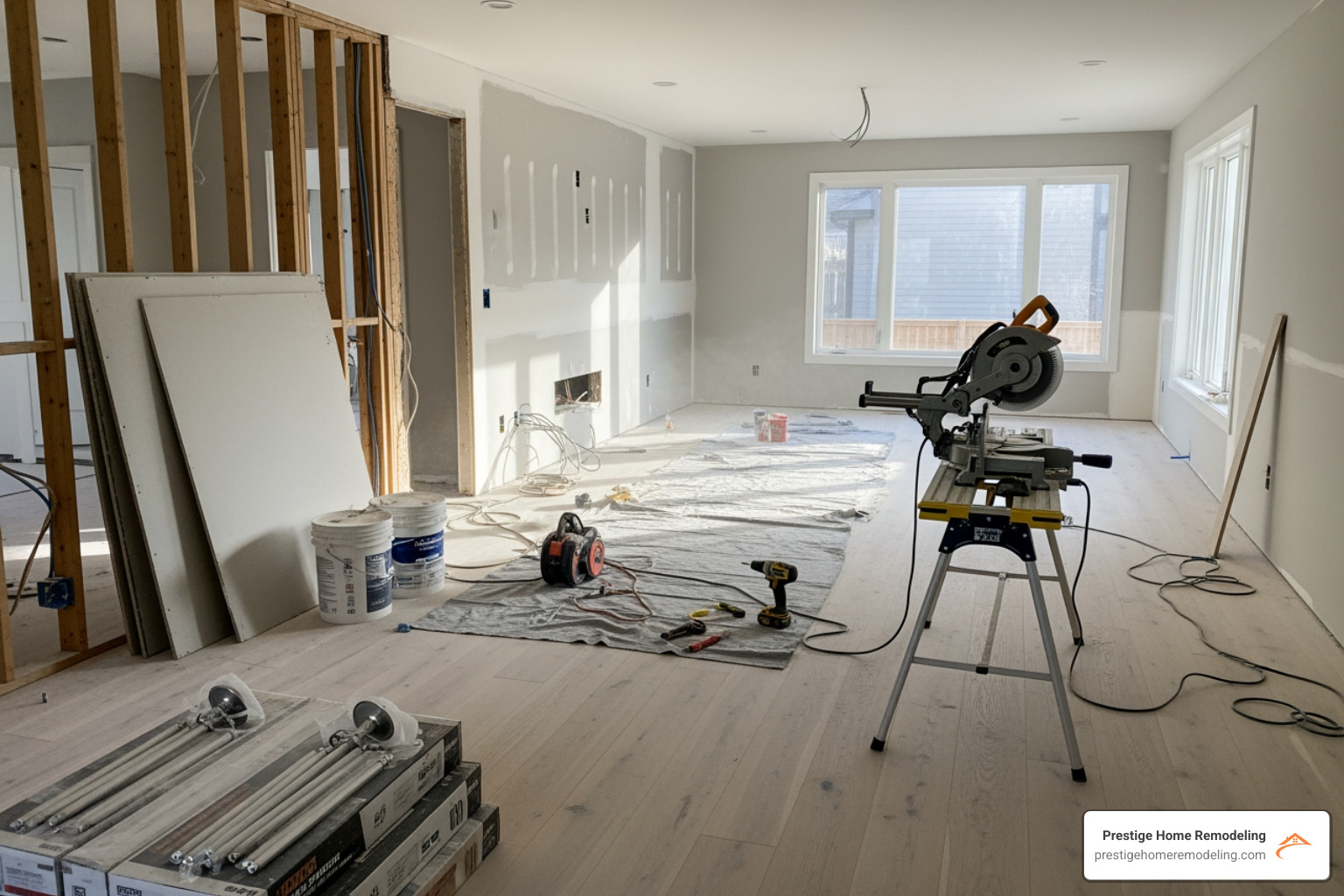
Maryland home improvement projects require careful attention to state regulations. Whether you're planning a kitchen remodel or a whole-home renovation, understanding these rules protects you from costly mistakes and ensures your contractor is qualified.
Key Facts About Maryland Home Improvement:
- All contractors must be licensed by the Maryland Home Improvement Commission (MHIC)
- The application fee is $370 with typical approval in 10-15 days
- Contractors must carry at least $500,000 in general liability insurance (as of June 2024)
- Maximum down payment allowed is 1/3 of the total project cost
- The MHIC Guaranty Fund protects homeowners up to $30,000 for poor workmanship
- Unlicensed contracting is a misdemeanor with fines up to $5,000 and potential jail time
The Maryland Home Improvement Commission defines "home improvement" broadly to include alteration, remodeling, repair, or replacement of residential buildings and individual condo units. This covers everything from built-in closet organizers to major additions.
However, not all work requires a license. New home construction, work on common condo areas, and buildings with four or more units are excluded. Projects under $500 also typically don't require licensing.
These regulations help you avoid the nightmare of hiring an unlicensed contractor. The MHIC investigates complaints, awards damages, and prosecutes violators. In 2024, the commission suspended multiple contractor licenses, leaving homeowners to file claims against the Guaranty Fund.
I'm Michael Aiello. With over 30 years in home construction throughout the Baltimore and Maryland region, I've seen how proper licensing protects both contractors and homeowners. At Prestige Home Remodeling, we maintain full MHIC licensing and help our clients steer these requirements for stress-free renovations.
Defining Home Improvement in Maryland
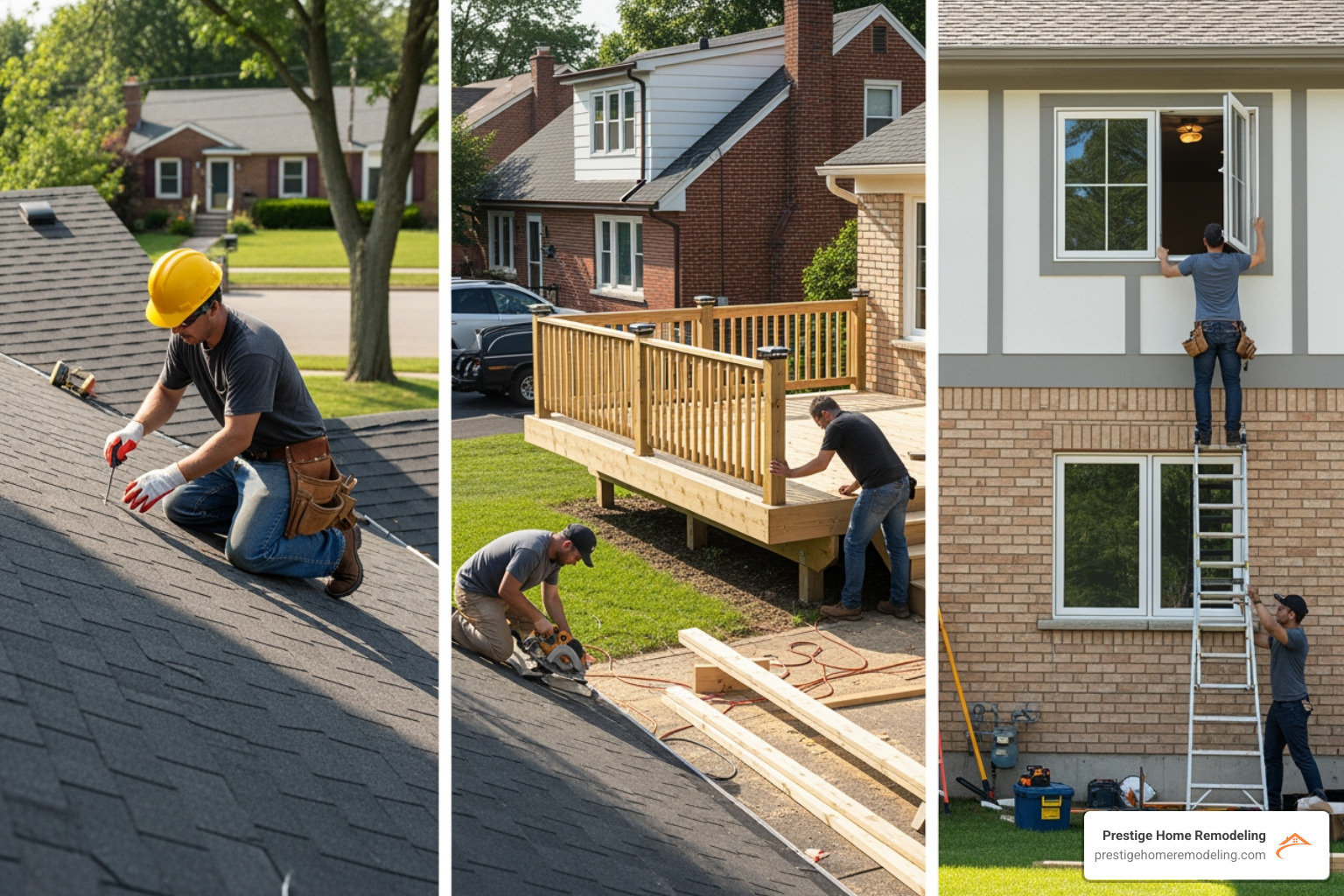
Maryland law defines "home improvement" broadly. According to the Maryland Home Improvement Law, Maryland home improvement includes any addition, alteration, conversion, improvement, modernization, remodeling, repair, or replacement of a residential building or adjacent land and structures. This definition determines when a contractor needs an MHIC license, which is your protection.
The rules also cover individual condominium units, so renovations in a Towson single-family home or a Baltimore condo are treated the same. We've helped homeowners throughout Maryland, from Hunt Valley to Cockeysville, steer these requirements.
For the official definition, check the Maryland Home Improvement Commission's explanation.
What Work Requires a License?
Because the definition is so broad, most residential work requires an MHIC license for any significant alteration, repair, or improvement.
This includes carpentry (framing, custom cabinetry), interior/exterior painting, and even significant landscaping like retaining walls or patios.
Masonry work like brickwork needs licensing. Any kitchen or bath remodel definitely requires it, from cabinets to plumbing to flooring. Our Kitchen Remodeling in Maryland and Bathroom Remodeling in Maryland services fall under this requirement.
Home additions, roofing, siding, and window and door replacement all need licensed contractors. Finishing a basement, like our Basement Remodeling in Maryland projects, requires licensing too.
Even smaller tasks like installing closet organizers can count if part of a larger project. The bottom line: if the work isn't specifically excluded, the contractor needs an MHIC license. That's why we maintain full licensing for all our Home Remodeling Services Maryland projects.
What Work is Excluded?
While Maryland home improvement covers a lot, certain work is excluded from MHIC regulation.
New home construction is the main exclusion, following different laws. Our Custom Home Builder in Maryland services operate under these separate frameworks.
Work on commonly owned condominium areas (lobbies, hallways) and on buildings with four or more single-family units doesn't require MHIC licensing, as these are typically considered commercial.
Appliance repair is also excluded.
Finally, projects under $500 often don't require licensing, but it's always safest to verify with the MHIC or hire a licensed contractor anyway.
Understanding these exclusions helps you know when MHIC licensing is required.
Your Guide to Maryland Home Improvement Licensing
A Maryland home improvement contractor's license is your assurance of professional standards. The Maryland Home Improvement Commission (MHIC), under the Department of Labor, oversees this process. Drawing its authority from Title 8 of Maryland's Business Regulation code, the MHIC can investigate complaints, enforce standards, and hold contractors accountable. The framework is designed for your protection.
The MHIC acts as a referee, setting and enforcing rules. At Prestige Home Remodeling, we appreciate this oversight, as it keeps the industry honest and helps legitimate contractors stand out.
You can find everything at the official Maryland Home Improvement Commission (MHIC) website.

The MHIC Contractor License Application Process
Becoming a licensed Maryland home improvement contractor is intentionally rigorous to weed out unqualified applicants.
The process starts with a $63 examination by PSI testing knowledge of business practices, legal requirements, and project management.
Next is a financial solvency check. By reviewing credit reports and financial statements (or a surety bond), the MHIC ensures a contractor can finish a project, preventing the nightmare of a half-finished job due to financial issues.
Contractors must also register their business with the state, obtaining tax IDs and setting up tax and insurance accounts. This ensures they operate as a legitimate business.
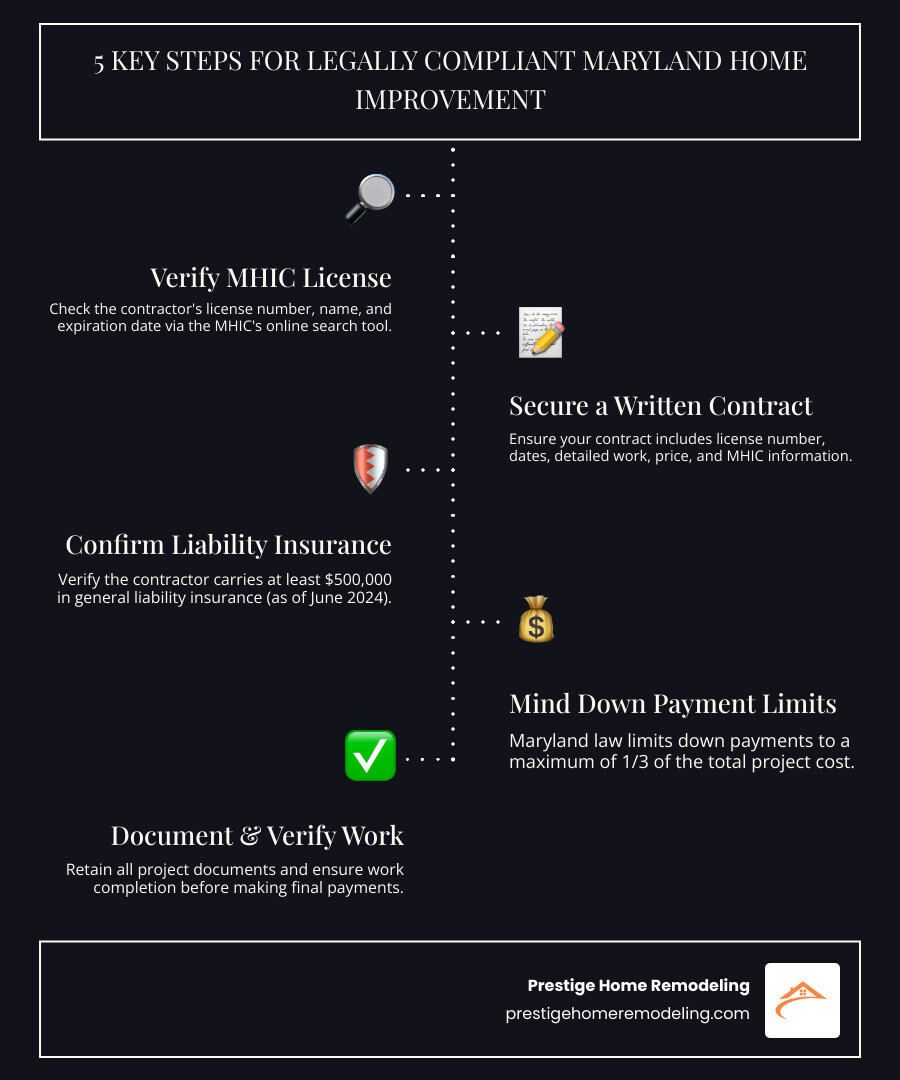
A crucial step is the liability insurance requirement. As of June 1, 2024, contractors must carry at least $500,000 in general liability insurance. This protects you from liability for accidents or damages. Always ask for the certificate of insurance.
A criminal history disclosure is also required. The MHIC reviews convictions, with serious offenses like fraud or theft raising red flags.
Finally, contractors submit the official application through this application portal. This vetting process means an MHIC license number represents study, financial scrutiny, and professional accountability when you're choosing a contractor.
Costs and Timelines for a Maryland Home Improvement License
Understanding licensing costs helps explain why legitimate contractors charge what they do.
The application fee is $370, plus a $63 examination fee. There's also a $100 Guaranty Fund assessment for the initial license. Every two years, contractors must renew and pay another $175 Guaranty Fund assessment.
A new contractor pays $533 upfront, then $175 every two years for renewal. These fees increased on August 1, 2024, so always check the current schedule of fees.
Once a complete application is submitted, approval typically takes just 10-15 days.
Specialized Licensing: Electrical, Plumbing, and Solar
Some work, like electrical, plumbing, or solar, requires specialized licenses beyond the general Maryland home improvement credential.
Electrical contractors need a master's license from the Board of Master Electricians. This requires seven years of experience (or equivalent education) and a specific PSI exam.
Plumbing contractors face similar requirements through the Department of Labor, Licensing, and Regulation. Maryland has journeyman and master plumbers, with extensive training hours and exams required for each level, often through PSI.
As of June 1, 2024, rooftop solar panel installation contracts must include a wildlife barrier to prevent animal damage. You can waive this, but the contractor must explain the risks and costs, and the contract must document your waiver with your initials.
When we handle comprehensive projects like kitchen remodeling in Maryland, we ensure every tradesperson carries the appropriate specialized license on top of our MHIC credentials.
Homeowner Protections and Dispute Resolution
When planning a Maryland home improvement project, you need to know your rights. The state has built-in protections to keep you safe from unscrupulous contractors.
First, every home improvement contract must be in writing—it's the law. It must be legible, signed by both parties, and include the scope of work, materials, costs, payment schedule, and the contractor's MHIC license number. This document is your legal protection against disputes.
Maryland law also sets strict down payment limits: a contractor cannot legally ask for more than one-third of the total project cost upfront. This rule prevents contractors from taking a large payment and disappearing.
Many homeowners are unaware of their cancellation rights. If you sign a contract in your home, you have 5 business days to cancel without penalty (7 business days if you're over 65). This cooling-off period allows for second thoughts.
Before signing, take five minutes to verify your contractor's license using the MHIC's online search tool: Verify a contractor's license here. Check if the license is active and view any complaint history. This simple step can save you from major headaches.
The MHIC Guaranty Fund Explained
If things go wrong with a licensed contractor, the MHIC Guaranty Fund is your financial safety net. The Guaranty Fund compensates homeowners for actual monetary losses from poor workmanship or a contractor's failure to complete a job. Funded by licensed contractors, it's a form of industry self-policing.
You might file a claim if your contractor abandons the job or does shoddy work. The claim process requires a specific form from the MHIC, and you have three years from finding the loss to file.
The fund pays up to $30,000 per claim, covering what you paid the contractor. Claims over $7,500 require a hearing. Be aware the process can be slow, taking two years or more. However, it's often the only path to recovering losses. Learn more here: More info about the MHIC Guaranty Fund.
At Prestige Home Remodeling, we focus on transparent communication and quality work so our clients never need to consider the Guaranty Fund.
Penalties for Unlicensed Maryland Home Improvement Work
Working without an MHIC license is a serious misdemeanor in Maryland. A first offense carries fines up to $1,000 and 30 days in jail. Repeat offenses can lead to $5,000 in fines and two years in prison. The MHIC actively prosecutes violators.
What does this mean for you? The risks become your problems.
Crucially, if you hire an unlicensed contractor, you have no access to the MHIC Guaranty Fund. Any losses from damage or fraud are your own. Unlicensed contractors also typically lack proper liability insurance, meaning you could be held responsible for accidents. Finally, they may cut corners and use substandard materials, costing you more in the long run to fix their mistakes. It's a risk no homeowner should take.
Frequently Asked Questions about Maryland Home Improvement
Here are some of the most common inquiries we receive about Maryland home improvement projects, with straightforward answers to help you move forward with confidence.
How do I verify if a contractor is licensed in Maryland?
Verifying a contractor's license is easy and takes only a few minutes. The MHIC provides a free online public search tool. Visit the Public Search portal and enter the contractor's name or license number.
You'll see their license status, expiration date, and business name. Confirm the license number, name, and that the license is active. If the license is expired, suspended, or doesn't exist, walk away.
Never sign a contract or pay before verifying. A legitimate contractor will readily provide their license number. We are proud to share ours as it shows our commitment to Maryland's regulations.
What are the insurance requirements for contractors?
Insurance is a critical protection. Without it, you could be liable for injuries or construction accidents on your property.
As of June 1, 2024, every licensed Maryland home improvement contractor must carry at least $500,000 in general liability insurance. This is a legal requirement for maintaining an MHIC license.
Always ask for a certificate of insurance. A professional will provide it readily. Verify it's current and covers your project dates. You can even call the insurer to confirm its validity. If a contractor hesitates to provide proof of insurance, consider it a major red flag.
What should be in my home improvement contract?
Your contract is your roadmap and protection. Maryland law specifies what must be included to prevent disputes. Every Maryland home improvement contract must be in writing and signed by both you and the contractor. Avoid verbal agreements, which leave you with no recourse if issues arise.
The contract must clearly display the contractor's name, address, and MHIC license number, along with specific start and completion dates. A critical section is the detailed description of work and materials; it should specify brands, colors, and grades to avoid confusion.
Your contract must state the total price and payment schedule. The down payment cannot exceed one-third of the total project cost. The contract must also explain your cancellation rights and include information about the Maryland Home Improvement Commission and the MHIC Guaranty Fund.
At Prestige Home Remodeling, we ensure our contracts are comprehensive, transparent, and fully compliant with Maryland regulations to protect everyone involved.
Conclusion
Understanding Maryland home improvement regulations is key to protecting your home and investment. These rules are safeguards, not just bureaucracy.
The key takeaway is to always hire a licensed contractor. An MHIC license means you're hiring a professional who is insured, financially stable, and accountable. It also gives you access to the MHIC Guaranty Fund if issues arise.
We've seen homeowners spend far more fixing the shoddy work of unlicensed contractors than they initially saved. With no legal protection, the risk simply isn't worth it.
At Prestige Home Remodeling, we've built our reputation on doing things the right way for over 50 years. We maintain full MHIC licensing, carry comprehensive insurance, and apply professional standards and regulatory compliance to every project, big or small.
Your home is likely your biggest investment. By understanding these regulations and working with licensed professionals, you're setting your project up for success.
Ready to transform your Maryland home with a team that values transparency, quality, and compliance? We'd love to discuss your vision. Start planning your Maryland home remodel with us today.