
Don't Cramp Your Style: Smart Small Kitchen Design Ideas
Why Small Kitchens Deserve Smart Design

Small kitchen design ideas can transform a compact cooking space into the functional, beautiful heart of your home. Many homeowners have kitchens around 100 square feet or less, but limited space doesn't mean you have to compromise on style or efficiency.
Quick Answer: Top Small Kitchen Design Ideas
- Maximize layout efficiency - Use galley, L-shaped, or U-shaped layouts with a work triangle between the sink, stove, and fridge (4-9 feet per leg).
- Go vertical - Install floor-to-ceiling cabinets and floating shelves to use wall space.
- Choose light colors - White, cream, and pastels reflect light and create openness.
- Add smart storage - Use corner carousels, pull-out pantries, and appliance garages.
- Use multi-functional elements - Incorporate rolling islands, fold-down tables, and compact appliances.
- Layer lighting - Combine ambient, task, and accent lighting, especially under-cabinet fixtures.
- Create visual space - Add mirrors, glossy finishes, and backsplashes that extend to the ceiling.
With the right design choices, you can pack serious functionality into a small footprint. Smart layouts, clever storage, and visual tricks with light and color can make your kitchen feel twice its size.
I'm Michael Aiello, and with over 30 years in home remodeling, I've learned that creative small kitchen design ideas often produce the most impressive results. At Prestige Home Remodeling, we specialize in turning challenging spaces into beautiful, functional kitchens homeowners love.
Maximizing Flow: The Best Layouts for Compact Kitchens
In a small kitchen, the layout is about making every movement count. The right layout transforms a cramped space into an efficient hub. For many Maryland homeowners with kitchens under 100 square feet, smart planning is key to creating a space that works better than a poorly designed larger one.
Effective Layouts for Small Kitchens
Each of these layouts offers unique benefits depending on your room's shape and lifestyle.
| Layout Type | Pros | Cons | Best For |
|---|---|---|---|
| Galley Kitchen | - Highly efficient workflow | - Can feel enclosed | - Narrow, rectangular spaces |
| - Maximizes storage on two parallel walls | - Limited social interaction | - Single cooks or small households | |
| L-Shaped Kitchen | - Excellent for open-concept spaces | - Corner can be hard to reach | - Corner spaces, integrating with dining/living |
| - Separates cooking and cleaning zones | - Less continuous counter space than U-shaped | - Allows for a small dining area | |
| U-Shaped Kitchen | - Maximum counter and storage space | - Can feel cramped in very small rooms | - Larger small kitchens |
| - Efficient work triangle | - May limit space for dining | - Dedicated cooks needing lots of prep area | |
| Single-Wall Kitchen | - Most space-saving | - Least efficient work triangle | - Studio apartments, very tight spaces |
| - Open and airy feel | - Minimal counter and storage space | - Minimalist living | |
| Peninsula Integration | - Adds counter space and seating | - Can obstruct flow if too large | - Small to medium kitchens needing an island alternative |
| - Acts as a bridge between rooms | - Reduces open floor space | - Defining kitchen zones |
The galley kitchen is a workhorse for narrow rooms, lining everything up on two parallel walls for an efficient "cook's corridor." For more open floor plans, an L-shaped kitchen tucks neatly into a corner, allowing the kitchen to flow into a dining or living area. The U-shaped kitchen offers the most counter and cabinet space but requires a slightly larger room to avoid feeling boxed in. A single-wall kitchen is the ultimate space-saver for studios, while a peninsula adds counter space and seating without needing room for a full island.
If you're considering opening up your kitchen, find more ideas in our guide to Open Concept Kitchen Ideas for Maryland Homes.
Applying the 'Work Triangle' for Optimal Workflow
One of the most important principles in kitchen design is the work triangle. This concept connects your three busiest spots—the sink, stove, and refrigerator—to create an efficient workflow. According to long-standing design principles, each leg of the triangle should measure between 4 to 9 feet, with a total perimeter between 13 and 26 feet. In a small kitchen, you'll be on the shorter end of that range, which means fewer steps and less wasted motion. For background and variations, see the kitchen work triangle.
- The sink is your most-used station. Placing it under a window provides natural light, and a corner sink can maximize counter space.
- The stove should be within easy reach of the sink and fridge, allowing you to pivot comfortably between prepping and cooking.
- The refrigerator works best at the end of a counter run or near the entrance, so family members can grab items without entering the main cooking zone.
At Prestige Home Remodeling, we always start with the work triangle. It’s a time-tested principle that makes your daily routine smoother. Getting the layout right is the foundation of great small kitchen design ideas. You can see more about how we're applying these principles in our look at Kitchen Design Trends Maryland Homes 2025.
Smart Storage Solutions and Small Kitchen Design Ideas
The biggest challenge in a small kitchen is finding a home for everything without creating chaos. With smart planning, you can add remarkable storage capacity by organizing your space so every item has a logical, accessible home.
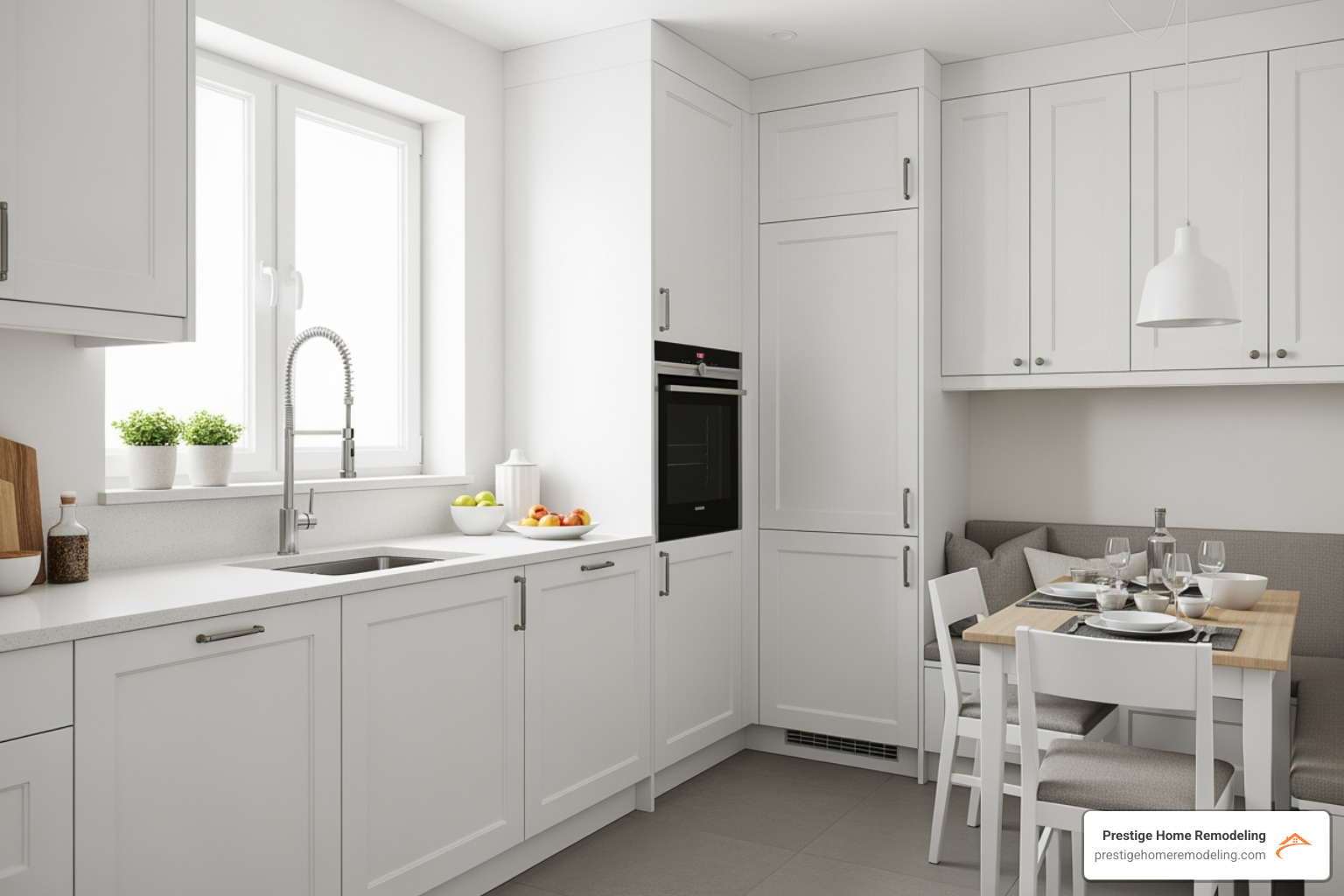
Go Vertical: Utilizing Wall and Ceiling Space
When floor space is limited, look up. Taking advantage of vertical real estate is one of the most effective small kitchen design ideas.
- Floor-to-ceiling cabinets are a game-changer. They add significant storage for less-used items and make ceilings feel taller.
- Floating shelves offer a lighter alternative to upper cabinets, providing accessible storage for everyday dishes while keeping the space feeling open.
- Wall-mounted pot racks and magnetic knife strips free up valuable cabinet and drawer space, turning functional items into design features.
- Hanging fruit baskets keep produce fresh and countertops clear.
Clever Cabinetry and Hidden Storage
Modern cabinetry can transform awkward spaces into highly functional storage.
- Corner cabinets can be optimized with lazy Susans or pull-out shelves that bring items to you.
- Slim pull-out pantries fit into narrow gaps (as small as nine inches) and are perfect for organizing spices, oils, and canned goods.
- Toe-kick drawers use the space beneath your lower cabinets for storing flat items like cookie sheets and cutting boards.
- Appliance garages hide countertop appliances like toasters and blenders behind a roll-up door, keeping surfaces uncluttered.
- Glass-front cabinets create visual depth, making the kitchen feel more open. Use them to display attractive dishware.
To maximize your cabinetry, add organizers like shelf risers, pan dividers, and stacking containers. If you're planning a renovation, our article on what comes first cabinets or floors can help with the sequence.
Flexible Elements: Islands and Tables
You might have room for an island—just not a traditional one. Flexibility is key.
- Rolling kitchen carts offer extra prep space when you need it and can be tucked away when you don't.
- Small, movable islands with an open base (exposed legs or a single shelf) maintain visual flow and prevent the space from feeling blocky.
- Drop-leaf tables serve as both dining spots and extra prep surfaces, adapting to your needs.
- Bar-height counters on a peninsula create informal seating with tuck-under stools that don't take up floor space.
The Art of Illusion: Making Your Small Kitchen Feel Grand
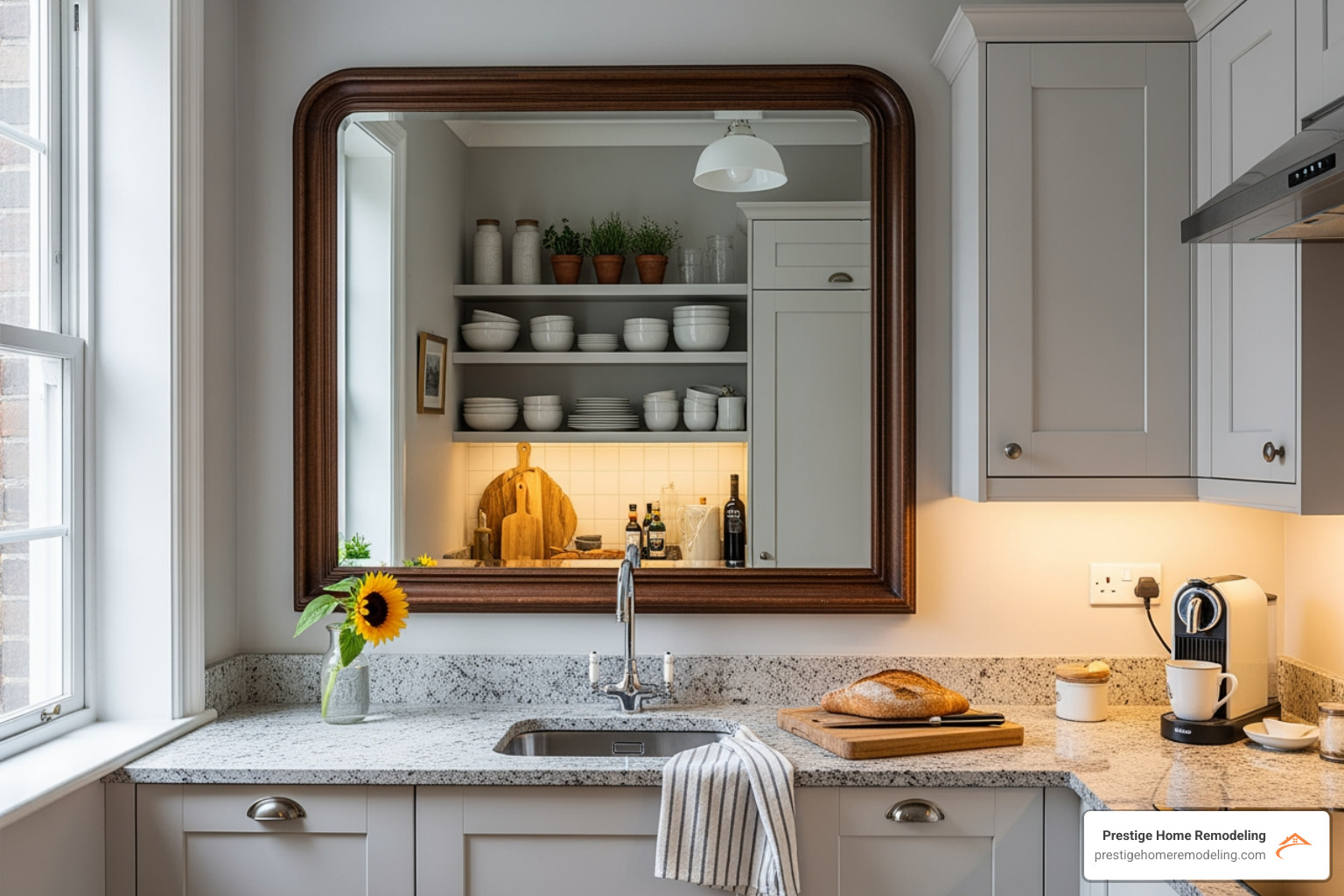
In a small kitchen, perception is reality. With the right design choices, you can use color, light, and visual tricks to make a 100-square-foot kitchen feel twice its size.
Lighting Strategies to Brighten and Enlarge
Proper lighting is the single most effective way to make a small kitchen feel bigger. A single overhead fixture creates a dim, cave-like space. The solution is layered lighting:
- Ambient Lighting: Start with general illumination from recessed ceiling lights.
- Task Lighting: Add under-cabinet lights to illuminate your countertops. This is essential for banishing dark corners and making prep work safer.
- Accent Lighting: Use pendant lights over a peninsula or LED strips in glass-front cabinets to add depth and draw the eye upward.
Maximize natural light whenever possible. Enlarging a window or adding a skylight can flood the room with light, making it feel bigger and more inviting.
Color Palettes and Design Elements for a Sense of Space
Light color palettes are your best friend. White, cream, soft grays, and pastels reflect light, making walls seem to recede and the room feel airy. You can add warmth to an all-white kitchen with wood tones or brass hardware.
Incorporate reflective surfaces to bounce light around the room:
- A glossy backsplash in subway tile, polished marble, or even a mirrored surface can make the kitchen feel brighter and more spacious.
- High-gloss cabinet finishes create a sleek, modern look that visually expands the space.
- Running the same flooring material from an adjacent room into the kitchen creates visual continuity, tricking the eye into seeing one larger area.
For professional guidance on these elements, learn more about our approach to Kitchen Remodeling in Maryland.
The Best Small Kitchen Design Ideas for an Open Feel
Simple visual tricks can create an open, flowing atmosphere.
- Extend your backsplash to the ceiling to draw the eye upward and make walls appear taller.
- Use mirrors on a blank wall or opposite a window to reflect light and create the illusion of depth.
- Choose sleek, handleless cabinetry with integrated pulls to create clean, uninterrupted surfaces that feel less cluttered.
- Maintain clear sightlines by keeping countertops clear and using open shelving or glass-front cabinets strategically. This creates a sense of flow that makes the entire area feel more expansive.
Finishing Touches: Appliances and Personalization
Even the smallest kitchen needs to be fully equipped for cooking, and more importantly, it should feel like yours. The secret is selecting appliances that work hard without taking up too much room, and adding personal touches that bring joy without creating chaos.
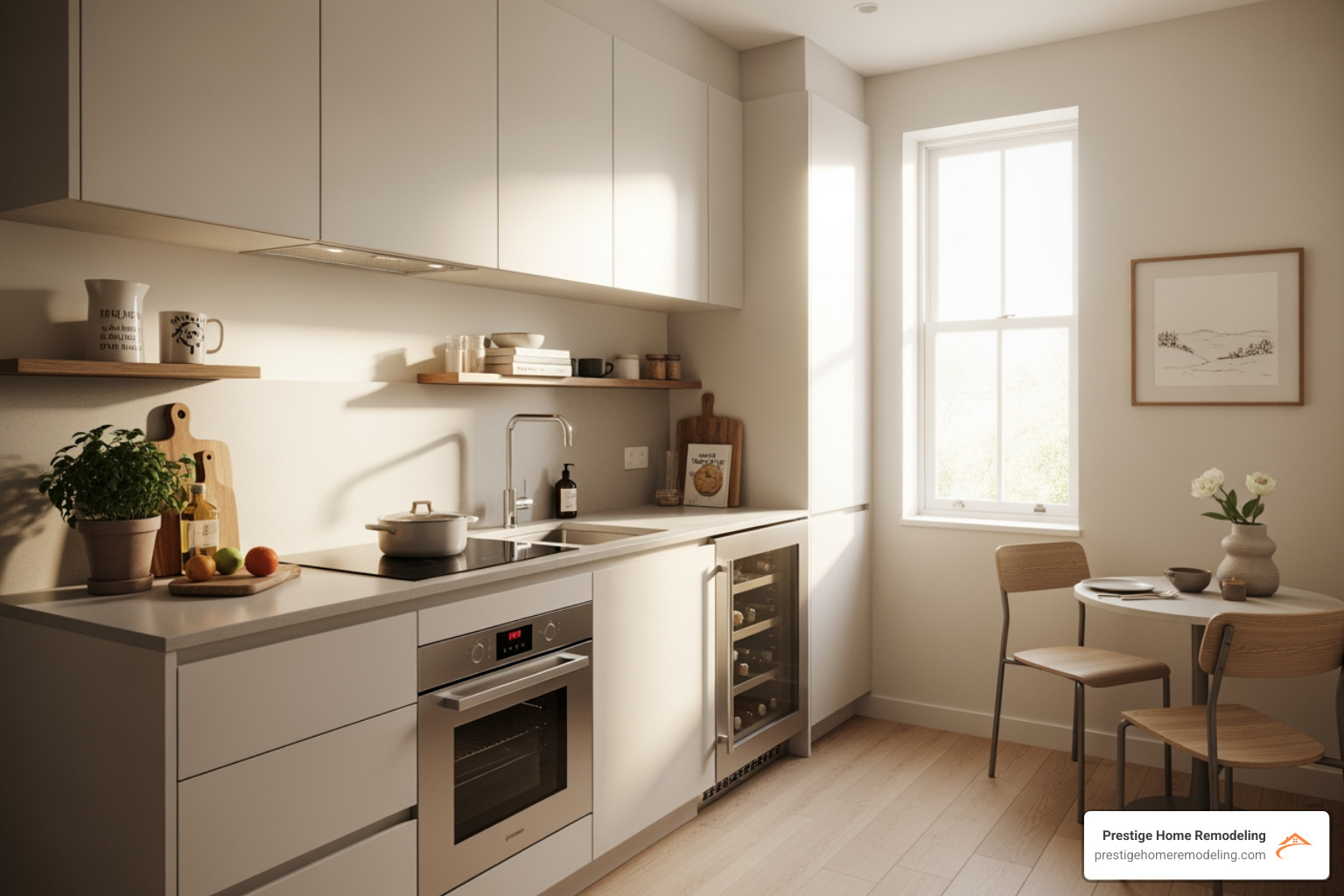
Choosing the Right Appliances
When it comes to appliances in a compact kitchen, size truly matters. But here's the good news: manufacturers have caught on to the fact that not everyone has a sprawling chef's kitchen, and they've responded with an impressive array of space-saving options.
- Compact appliances: Look for 18-inch dishwashers, smaller-width ranges, and compact refrigerators designed for tight spaces.
- Counter-depth refrigerators: These slim-profile models sit flush with your cabinets, creating a seamless look and saving floor space. Paneled versions can blend in completely.
- Combination appliances: A microwave that doubles as a convection oven provides two functions in one footprint.
- Dishwasher drawers: These single-drawer units are perfect for small households and free up valuable cabinet space.
- Integrated appliances: Building appliances directly into cabinetry creates a streamlined appearance that makes any kitchen feel more sophisticated.
Understanding the investment involved in these choices is important. For detailed information about budgeting for your renovation, check out our guide on the Average Kitchen Remodel Cost.
Personalizing Your Space Without Sacrificing Function
Make your kitchen uniquely yours with carefully chosen details.
- Cabinet hardware: Distinctive pulls or knobs act as the jewelry of your kitchen. For a modern look, choose integrated pulls.
- Curated displays: Use open shelving to display beautiful and useful items like glassware, serving bowls, or cookbooks.
- Natural elements: Potted herbs on a windowsill or a small plant on a shelf can make a kitchen feel alive and welcoming.
- Textiles: A colorful rug or light-filtering café curtains add warmth and personality.
- Statement backsplash: Since you need less material, you can splurge on handmade tile or a bold pattern to create a focal point.
Personal touches like artwork or a bold paint color on lower cabinets can add character. The golden rule is to keep it organized. When everything has its place, even the smallest kitchen feels spacious and serene. At Prestige Home Remodeling, we love helping homeowners transform their compact kitchens into spaces that work beautifully and reflect their personal style. Ready to explore what's possible? Learn more about our comprehensive Kitchen Remodeling in Timonium services.
Frequently Asked Questions about Small Kitchens
Here are answers to some of the most common questions we hear at Prestige Home Remodeling about designing for compact kitchens.
What is the best layout for a small kitchen?
The best layout depends on your room's shape, but L-shaped and galley layouts are typically the most efficient. An L-shaped layout is great for corners and open-concept spaces, while a galley layout is perfect for narrow rooms, maximizing efficiency in a tight corridor. A U-shaped layout offers the most storage but requires a bit more width to feel comfortable.
How can I add more storage to my tiny kitchen?
Maximize vertical space with floor-to-ceiling cabinets and wall-mounted shelves. Use clever solutions like corner carousels, slim pull-out pantries, and toe-kick drawers to use every inch. Multi-functional furniture, like a rolling island with built-in storage, also adds flexible counter and storage space. Wall-mounted pot racks and magnetic knife strips are also great for freeing up drawers and cabinets.
What colors make a small kitchen look bigger?
Light and neutral colors like white, cream, light gray, and soft pastels are most effective. They reflect light, making the space feel brighter and more open. A monochromatic color scheme improves this effect. You can also use glossy finishes on cabinets and backsplashes to bounce light around the room, further creating the illusion of space.
Conclusion
Your small kitchen has incredible potential. With the small kitchen design ideas we've explored, you can see how thoughtful planning, clever storage, and strategic design can transform a compact space. The journey starts with an efficient layout, smart vertical storage, and the use of light and color to create a sense of openness.
The best kitchens are also personal. Your space should reflect who you are, from a bold backsplash to a simple herb garden on the windowsill. At Prestige Home Remodeling, we have over 50 years of combined experience helping Maryland homeowners create kitchens they love, no matter the size.
Your small kitchen isn't a limitation—it's an opportunity to create something efficient, stylish, and uniquely yours. You don't have to figure it out alone.
Ready to transform your compact kitchen into the space you've been dreaming of? Get expert help with your Kitchen Remodeling in Timonium and let's turn your vision into reality.